
ASSESSMENT AND EVALUATION
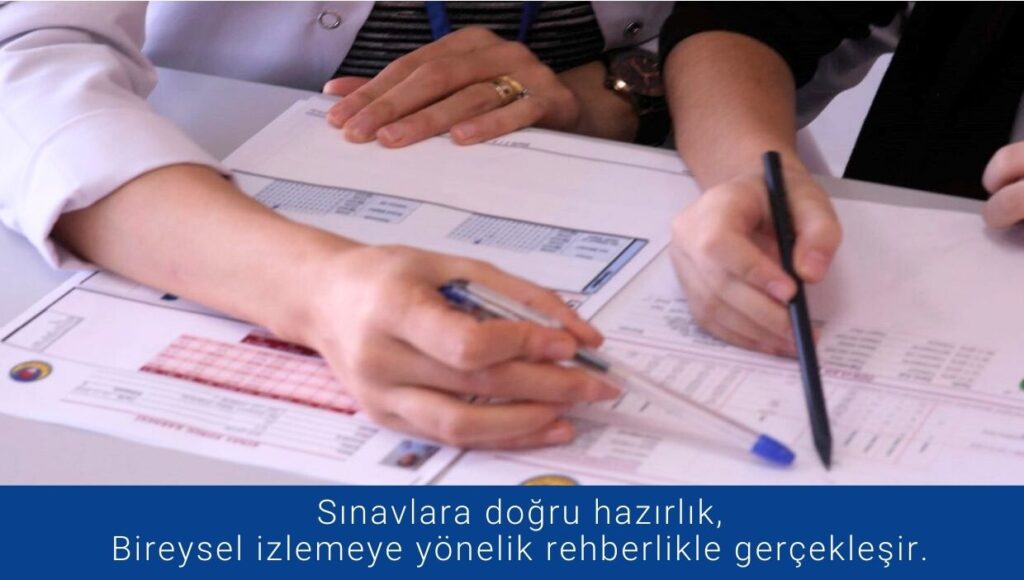
In our contemporary era where knowledge production advances at an uncontrollable pace, measuring and evaluating students' learning and ensuring that new learning proceeds soundly forms the primary mission of the Assessment and Evaluation Unit. Operating towards this objective, the unit establishes our school's examination system and monitors student development using alternative assessment tools and methodologies. The unit carries out the formulation of outcome-oriented measurement instruments and the scheduling of administrative processes to determine students' academic standings within the curricula. For this purpose, it coordinates the collaborative development of measurement tools with teachers, analysis of findings, identification of student outcome mastery levels and learning gaps, and the provision of continuous feedback to instructors and parents.
Examination System
The examination system is implemented under the coordination of the Assessment and Evaluation Unit, in close partnership with TED Headquarters and academic faculty.
Administered Examinations:
Basic Skills Assessment (TBU - Temel Beceri Uygulamaları Sınavı): Conducted simultaneously across 45 TED schools, the TBU exam serves as an evaluation instrument targeting grades 5-8 across four core academic disciplines. The primary purpose of this assessment is to determine the extent to which students acquire curriculum-mandated competencies and evaluate their proficiency in core and interdisciplinary domains. Composed of questions where curricular units, topics, and concepts serve as instruments rather than endpoints, results are utilized to map student learning profiles. The assessment never creates competitive environments where students are selected or ranked, or where schools are compared against each other based on numerical averages.
Readiness Examinations (Hazırbulunuşluk Sınavları): Administered at the start of the academic year to identify students' mastery of prerequisite learning outcomes for their current grade level and remedy gaps promptly. Exam content covers core academic subjects and foreign languages.
Progress Monitoring Examinations (İzleme Sınavları): Administered during instructional processes at the end of each learning domain, theme, or unit. Students' identified gaps are completed before progressing to subsequent learning domains.
Learning Outcome Evaluation Examinations (KDU - Kazanım Değerlendirme Uygulaması): Designed to elevate students' learning skills by tracking progress via an internationally benchmarked examination. KDU is structured according to the same theoretical frameworks as international PISA and TIMSS assessments, evaluating students' knowledge and skills in light of cognitive processes. Rather than simple test scores and rankings, the exam produces comprehensive analytical reports showing the progressive development of learning skills. Content comprises Turkish, Mathematics, Science, and Social Studies. Prepared by SEBIT, it is administered annually in January and May to students in grades 5, 6, 7, and 8.
Level Exit Exam / End Of Year / TED Exit Exam (LEE - EYE - TEE): Developed by the TED Headquarters Foreign Languages Coordination Office and administered to determine students' year-end linguistic competencies across the four core language skills. It measures the degree to which students achieve proficiency levels defined in the Common European Framework of Reference for Languages (CEFR) targeted for each grade level in the TED Schools English curriculum.
Mock Examinations (Deneme Sınavları): In addition to the examinations outlined above, mock exams are administered throughout the academic year according to a preset calendar within high school transition (LGS) and university preparation (YKS) programs. Students in middle school grades 5, 6, 7 and high school grades 9, 10, 11 sit for at least one mock exam each month, while exam-taking grades (8th and 12th) sit for two or more exams monthly. Alongside campus-administered assessments, nationwide mock exams coordinated by TED Headquarters are implemented. Developmental and remedial instructional plans are organized according to mock exam outcomes. Furthermore, detailed results are shared transparently with students and parents via the K12NET portal.